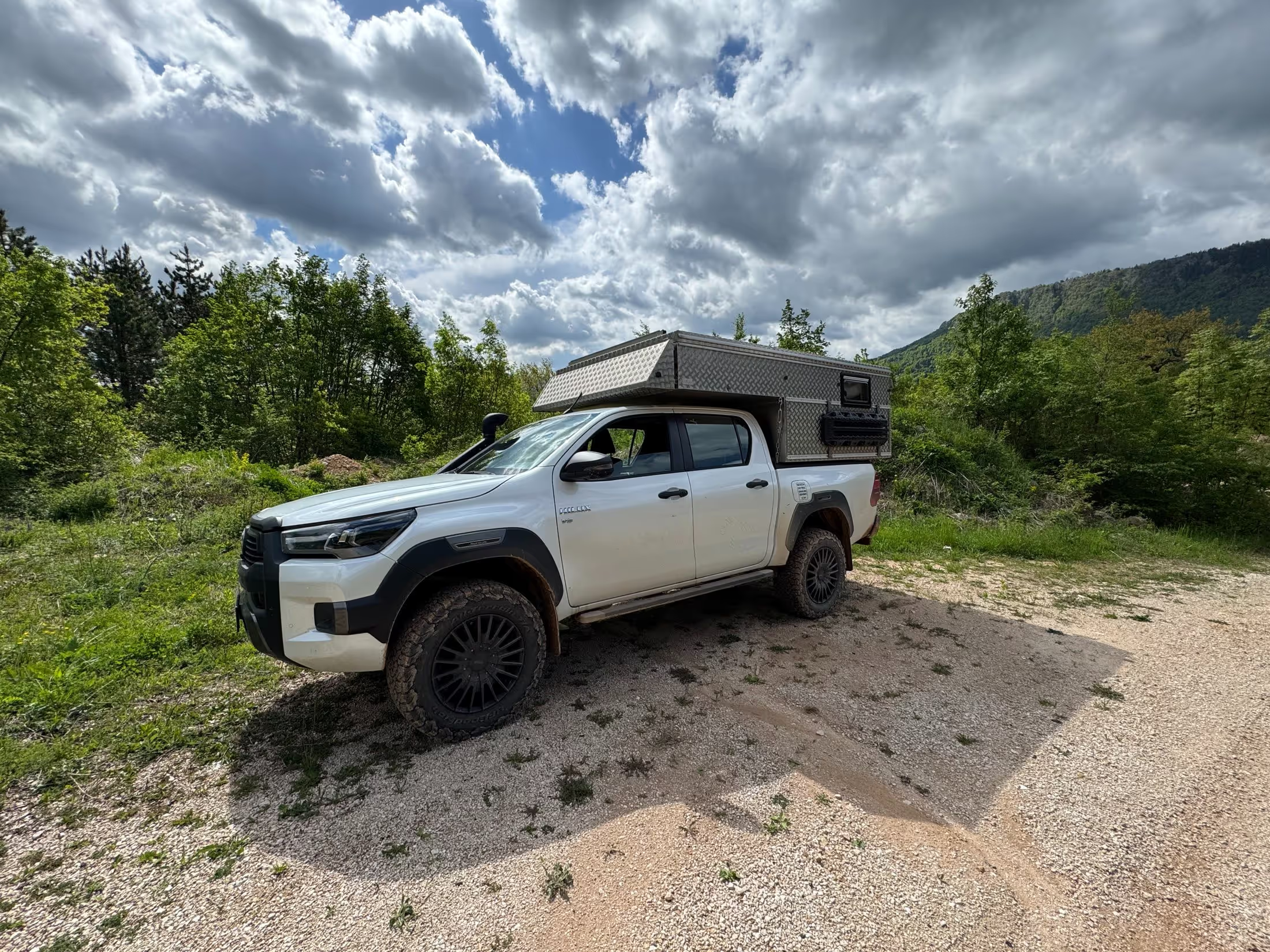
Karl on the track into the mountains

The vehicle

Karl.

My home on four wheels — and wherever in the world it happens to be, it simply has to run.

A Toyota Hilux, built out into a world-travel platform by Toyota Nestle in Dornstetten and individually approved by the TÜV. The numbers below are real ones — measured, not estimated.

The datasheet

Base
Toyota Hilux Double Cab · 4.0 V6 petrol · Euro 6 · GCC import
Weight
uprated to 3,500 kg (front 1,700 / rear 2,250 kg)
Suspension
Nestle Advanced (springs & dampers, front/rear), wheel alignment set
Drivetrain
permanent AWD · 100 % centre diff lock · front locker
Wheels
BFGoodrich A/T 285/60 R18 on alloys · wheel spacers
Brakes
18″ kit, 380 × 34 mm, 6-piston
Protection
full aluminium underbody protection · rock rails · recovery points · snorkel
Fuel
4.0 V6 petrol (deliberate, see below) · 125 l aluminium tank + 2 jerry cans
Power
220 W solar (2 panels) · 107 Ah AGM (LiFePO₄ planned) · Votronic control · 230 V shore power
Water
pressurised, stainless basin, 2 × 16 l fresh
Living
night heater · compressor fridge · chemical-free dry toilet
Status
individual TÜV approval 04/2025, “no detectable defects”
Axle loads
Front axle1,700 kgRear axle2,250 kgpermitted total3,500 kg

The permitted axle loads add up to more than the permitted gross weight — which is why what matters is the distribution, not the sum. Keep the heavy things low and central and the handling stays honest.

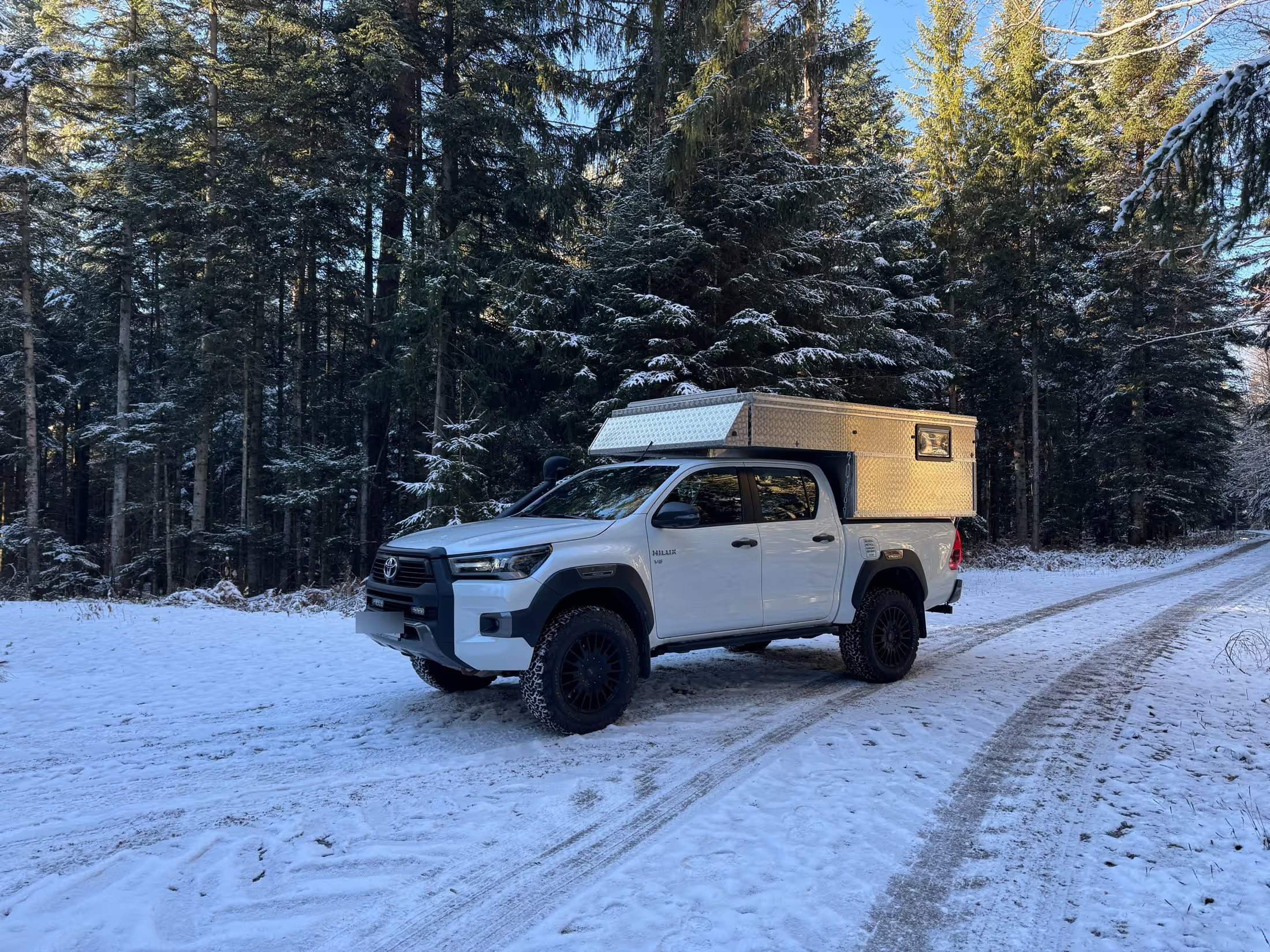
Karl in the snow
Karl in winter
01

Build & philosophy

Not as much as possible, but the right things. It has to run, it has to be fixable anywhere, and it has to carry its weight honestly. Good tools, no cheap shortcuts — so that the long haul stays relaxed, not just the weekend.

Signed offindividual TÜV approval 04/20253,500 kg permittedfront 1,700 · rear 2,250 kg
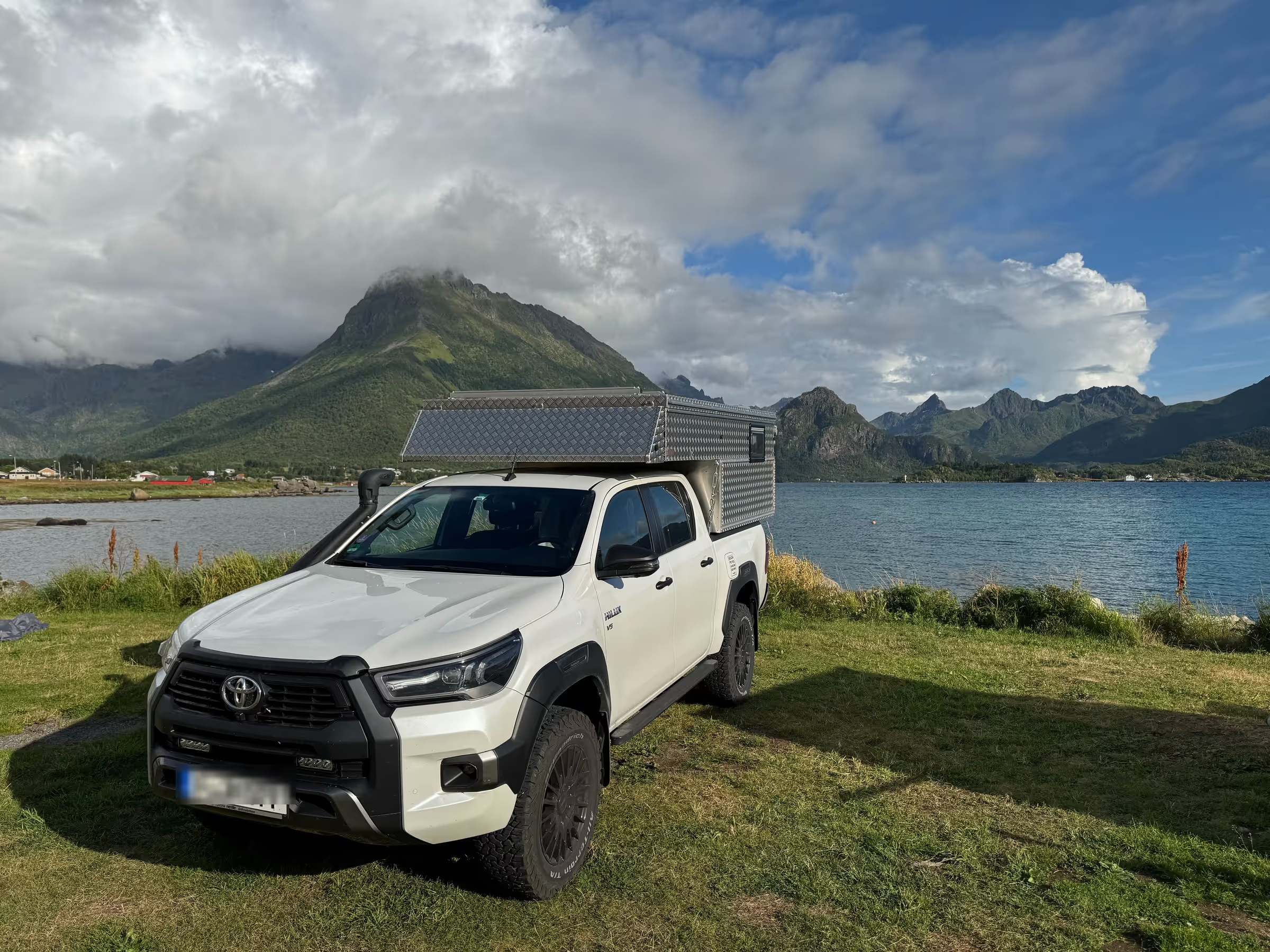
Karl by the fjord beneath the Lofoten peaks
02

Why petrol

A deliberate decision against the diesel reflex. No DPF, no AdBlue — where fuel quality is poor, both cause more trouble than they are worth. The 4.0 V6 is simple, robust and, in GCC trim, built for heat and dust. The price for that is the higher consumption, and I cover it with a 125-litre aluminium tank and two jerry cans: range enough for the legs where fuel stations thin out.

Drivetrain4.0 V6 petrol125 l aluminium tank2 jerry cans
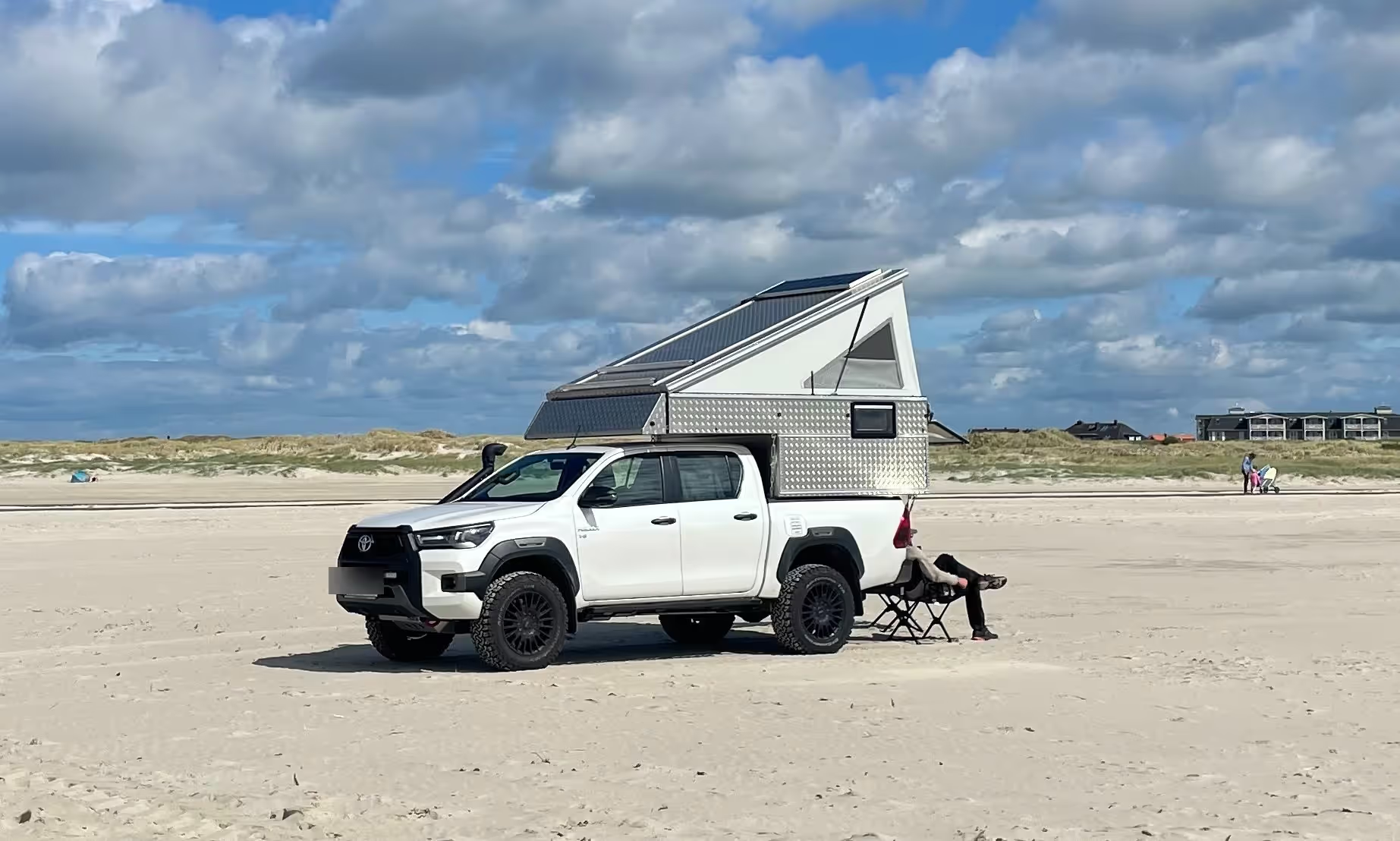
Karl on the open shore
Karl on the road
03

The cabin — EXKAB 1S RF

A demountable cabin built by Fabian Loh (EXKAB). An aluminium frame clad in salt-water-resistant ALMG3 chequer plate — bonded, welded and riveted, which makes it very strong for its weight. Well insulated (walls 30, roof 35, alcove 40 mm), a bright HPL interior and a pop-top roof. Power, water and living quarters make up their own small system — one that can be lifted off the truck and left standing.

CabinALMG3 chequer platewalls 30 · roof 35 mmalcove 40 mm

From the road

A data sheet says what a vehicle is allowed to do. Driving it says what it can actually do — and what that costs.

01

Payload

Empty, Karl weighs 2,850 kg; loaded and ready to go, around 3,200. With 3,500 permitted, that leaves a good 300 kg of headroom — and headroom is there to be kept, not spent. It is the real reason less comes along than it used to: every kilo comes out of the reserve, not off the paperwork.

Weighed2,850 kg empty~3,200 kg loaded3,500 kg permitted
02

Consumption & range

Fifteen litres per hundred kilometres — loaded, with the cabin, on the long haul; more off-road. That is the price of the 4.0 V6, and it is a known price, not a massaged one. With 125 litres in the tank it works out at a good 800 kilometres; the two jerry cans are for the legs where you cannot count on the next fuel station being there.

Measured15 l/100 km loaded125 l tanka good 800 km
03

What breaks

In three vehicles and more than ten years, it was never the drivetrain. What breaks are brackets and furniture mounts — off-road the body is always working, and any fastening that ignores that will let you know sooner or later. If you are planning an interior, think less about panel thickness and more about what holds it together.

Pattern3 vehicles10+ yearsnever the drivetrain
04

Service on the road

A Toyota can be fixed anywhere in the world — that is not a slogan, it is half the reason for the base vehicle. Something was still missing out there all the same, and it was the smallest thing: glass fuses. The box held automotive blade fuses in every rating, but the cabin’s electrics run on glass fuses. Both kinds live in the drawer now.

Learnedfixable worldwidecarry glass fuses
05

Winter

The cabin takes a winter well — that is what the 30 to 40 millimetres of insulation are for. Below roughly minus six the heater runs continuously; above that it only needs to run now and then. That is less a question of comfort than of water: what stays warm doesn’t freeze.

Thresholdheat continuously below −6 °C30–40 mm insulation
06

Demounting

The cabin can be demounted. In practice it has stood beside the truck exactly twice. That is more honest than the promise: taking it off is the option for staying somewhere a while, or for needing the pickup on its own — not an everyday thing.

Tallydemounted twice
07

What I’d build differently

Swap the factory bed for a flatbed. The cabin would gain a few centimetres in every direction — and centimetres inside a cabin are not to be found anywhere else.

Openfactory bed → flatbed